
High voltage RF connectors are critical components in test and measurement equipment, nuclear physics instrumentation, and medical devices. At first glance, both SHV (Safe High Voltage) and MHV (Miniature High Voltage) connectors closely resemble standard BNC connectors due to their bayonet locking mechanisms. However, selecting the wrong interface for a high-voltage application is not just an operational error—it is a severe safety hazard.
This guide explores the critical engineering differences between SHV and MHV connectors, explaining why visual similarities can be deceptive, and detailing which connector you should specify for your high-voltage designs to ensure operator safety and system integrity.
What is an MHV Connector (Miniature High Voltage)?
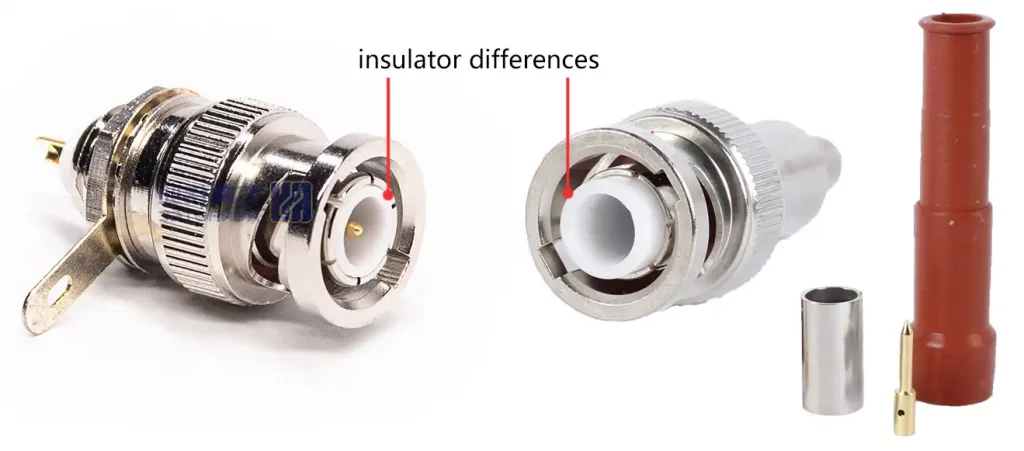
The MHV (Miniature High Voltage) connector is an early variant of the ubiquitous BNC interface, specifically modified to handle higher voltages. Structurally, it utilizes the same two-stud bayonet coupling mechanism, allowing for quick mating and unmating in laboratory environments.
Key Technical Specifications of MHV:
- Operating Voltage: Typically rated up to 5,000V DC (5kV).
- Coupling Mechanism: Bayonet lock (BNC style).
- Impedance: Non-constant (typically not used for high-frequency RF applications requiring strict impedance matching).
- Frequency Range: Generally limited to low frequencies (up to 50 MHz).
Note: Actual safe operating voltage for MHV may decrease depending on atmospheric pressure and environmental humidity.
The Critical Safety Flaw: Despite its high voltage rating, the MHV connector possesses a fundamental design vulnerability regarding operator safety. When unmating an MHV connector, the outer shell (ground connection) disconnects before the inner high-voltage center contact. This means if the cable remains energized or retains residual capacitance, the exposed center pin can deliver a severe or lethal electrical shock to the operator.
Furthermore, the geometry of an MHV connector is dangerously close to that of a standard BNC. It is physically possible to force an MHV plug into a standard BNC receptacle. If 5kV is accidentally routed into a standard 500V-rated BNC port, it will immediately cause dielectric breakdown, arc-over, and catastrophic equipment failure. Due to these inherent risks, MHV connectors are largely considered legacy components and are not recommended for new engineering designs.
What is an SHV Connector (Safe High Voltage)?
The SHV (Safe High Voltage) connector was engineered specifically to address the lethal shortcomings of the MHV design. Originally developed based on NIM (Nuclear Instrumentation Methods) standards, the SHV was designed to provide a fail-safe interface for sensitive nuclear research and high-voltage power supplies. While it retains the quick-connect bayonet coupling familiar to BNC users, its internal architecture is fundamentally different, prioritizing “Safety-by-Design.”
Key Technical Specifications of SHV:
- Operating Voltage: Rated up to 5,000V DC (Standard) and often tested higher.
- Mating Sequence: Ground-before-mate / Break-before-ground.
- Impedance: 50 Ohms (nominal), offering better signal integrity than MHV.
- Insulation Material: High-grade PTFE (Teflon) to prevent tracking and arcing.
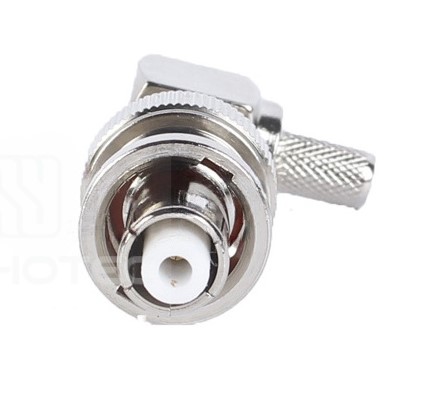
The “Safety-First” Engineering Approach: The defining characteristic of the SHV connector is its recessed center contact. The female conductor is buried deep within the insulating dielectric, far enough that it cannot be touched by a human finger or a stray conductive tool.
More importantly, SHV connectors utilize a specific mechanical geometry that ensures the outer ground shells make contact before the high-voltage pins engage during mating. Conversely, during unmating, the high-voltage circuit is broken while the ground connection is still securely intact. This “ground-first” logic effectively bleeds off any residual charge and prevents the connector housing from becoming “hot” (electrically live) relative to the user.
Unlike the MHV, the SHV is designed with a non-intermateable geometry regarding standard BNC hardware. The protrusion of the insulator prevents an SHV plug from being accidentally inserted into a BNC or MHV socket, providing a mechanical “fail-safe” that protects sensitive low-voltage instrumentation from high-voltage transients.
SHV vs. MHV Connectors: 3 Critical Differences You Must Know
While both connectors are designed for high-voltage coaxial applications, the engineering philosophy behind them has shifted significantly over the decades. Understanding these three critical differences is essential for maintaining laboratory safety and equipment longevity.
Mating Sequence and “Safety-by-Design”
The most significant difference lies in the contact sequence during mating and unmating. This is the primary reason why SHV has superseded MHV in modern safety standards.
- SHV (Ground-Before-Mate): The outer shell (ground) of the SHV connector makes electrical contact with the receptacle before the high-voltage center pin. When disconnecting, the center pin breaks the circuit while the ground is still intact. This ensures that any residual high-voltage charge is safely referenced to the ground, preventing the connector body from becoming a shock hazard.
- MHV (Simultaneous/Undefined): In an MHV connector, it is possible for the center pin to make contact while the outer ground shell is still physically separated. During unmating, if the ground breaks before the high-voltage pin, the entire connector housing—and by extension, the equipment chassis or the operator’s hand—could momentarily reach the full potential of the high-voltage source.
Mechanical Geometry and BNC Compatibility
One of the most dangerous aspects of high-voltage systems is the accidental cross-connection with low-voltage signal paths.
- MHV Risk: The MHV connector is physically compatible with many standard BNC components. While they are not “intended” to be interchangeable, an operator can often mate an MHV plug into a standard BNC jack. If a high-voltage power supply is mistakenly connected to a low-voltage oscilloscope or sensor via an MHV-to-BNC error, the result is usually the immediate destruction of the low-voltage device and a high risk of fire or arc-over.
- SHV Safety: SHV connectors feature a significantly protruded dielectric insulator. This physical barrier makes it mechanically restricted to plug an SHV connector into a standard BNC or MHV port. This “fail-safe” design prevents accidental over-voltage conditions in complex laboratory setups where multiple types of coaxial cables are present.
Electrical Performance and Frequency Limits
Beyond safety, the electrical characteristics of these connectors dictate their suitability for specific RF and pulse applications.
| Feature | MHV Connector | SHV Connector |
|---|---|---|
| Standard Voltage Rating | Up to 5,000 V DC | Up to 5,000 V DC (Standard) |
| Center Pin Design | Exposed / Slightly Recessed | Deeply Recessed (>10mm) |
| BNC Compatibility | Possible (Dangerous) | Impossible (Non-intermateable) |
| Mating Logic | Break-before-ground | Ground-before-mate |
| Impedance | Non-constant | 50 Ohm (Nominal) |
| Ideal Application | Legacy maintenance only | New designs, Nuclear, Medical |
Why Impedance Matters: While both are “High Voltage” connectors, SHV provides a more consistent 50-ohm impedance environment. In high-speed pulse applications, such as those found in particle physics or pulsed laser systems, impedance mismatches can cause signal reflections. These reflections not only distort data but can also lead to voltage standing wave ratio (VSWR) issues that stress the insulation further.
Why You Should Always Choose SHV for New Engineering Designs
From a modern engineering and safety compliance perspective, the SHV connector is the only responsible choice for new high-voltage systems. While MHV connectors may still be found in surplus catalogs or legacy laboratory setups, their inherent design flaws pose unnecessary risks to both personnel and sensitive equipment.
1. Compliance with International Safety Standards
Modern safety regulations, such as IEC 61010-1 (Safety requirements for electrical equipment for measurement, control, and laboratory use), place heavy emphasis on preventing accidental contact with hazardous live voltages. The SHV connector’s recessed contact design is a direct response to these requirements, whereas the MHV’s exposed pin during unmating fails many contemporary safety audits.
2. Risk Mitigation and Liability
In a professional laboratory or industrial environment, using “Safety-by-Design” components like SHV reduces the risk of workplace accidents. Should an incident occur with a legacy MHV system, it is much harder to justify the choice of a known “unsafe” interface when a safer, standardized alternative like SHV was readily available.
3. Future-Proofing Your System
As the industry continues to phase out MHV interfaces, sourcing high-quality MHV components and cable assemblies will become increasingly difficult and costly. By standardizing on SHV now, you ensure long-term availability of parts and compatibility with the latest generation of high-voltage power supplies and detectors.
FAQ
Q1: Can I connect an MHV connector to a standard BNC?
Technically, yes—and that is exactly why it is dangerous. An MHV plug can often be forced into a standard BNC jack. If the MHV line is carrying high voltage (e.g., 5kV), it will immediately destroy the BNC-equipped device and create a significant arc-over hazard. SHV connectors prevent this through a mechanical “fail-safe” geometry that is physically incompatible with BNC.
Q2: What is the maximum voltage an SHV connector can handle?
Most standard SHV connectors are rated for 5,000V DC (5kV). However, performance can vary based on the cable type used and the manufacturer’s specific dielectric materials. Always consult the manufacturer’s datasheet for the specific peak voltage and RMS ratings.
Q3: How can I visually tell the difference between SHV and MHV?
The most reliable way is to look at the internal insulator (the white PTFE part). In an SHV connector, the insulator protrudes significantly past the outer shell, and the metal contact is buried deep inside. In an MHV connector, the insulator is much shorter, and the center contact is much closer to the interface surface, similar to a standard BNC.
Upgrade Your High Voltage RF Systems Today
Selecting the right interconnect is a critical decision that impacts the safety and reliability of your entire high-voltage project. Whether you are maintaining a legacy system or designing the next generation of particle detectors, our engineering team [email protected] is here to help you select the optimal SHV or MHV solution. Contact our technical support team for a consultation or request a quote for bulk orders.

Connectors & cable assemblies manufacturer.
Sharing insights on connectors and real-world applications.
Contact for datasheets, samples, or inquiries.
