Introduction
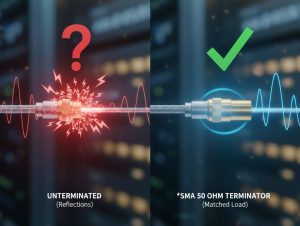
In the precision world of Radio Frequency (RF) engineering, an open port is more than just a loose end—it is a source of chaos. When an RF signal travels down a transmission line and hits an open end, it doesn’t just stop; it bounces back. This reflection, often called a “ghost signal,” travels back to the source, causing interference, standing waves, and potential damage to sensitive amplifiers.
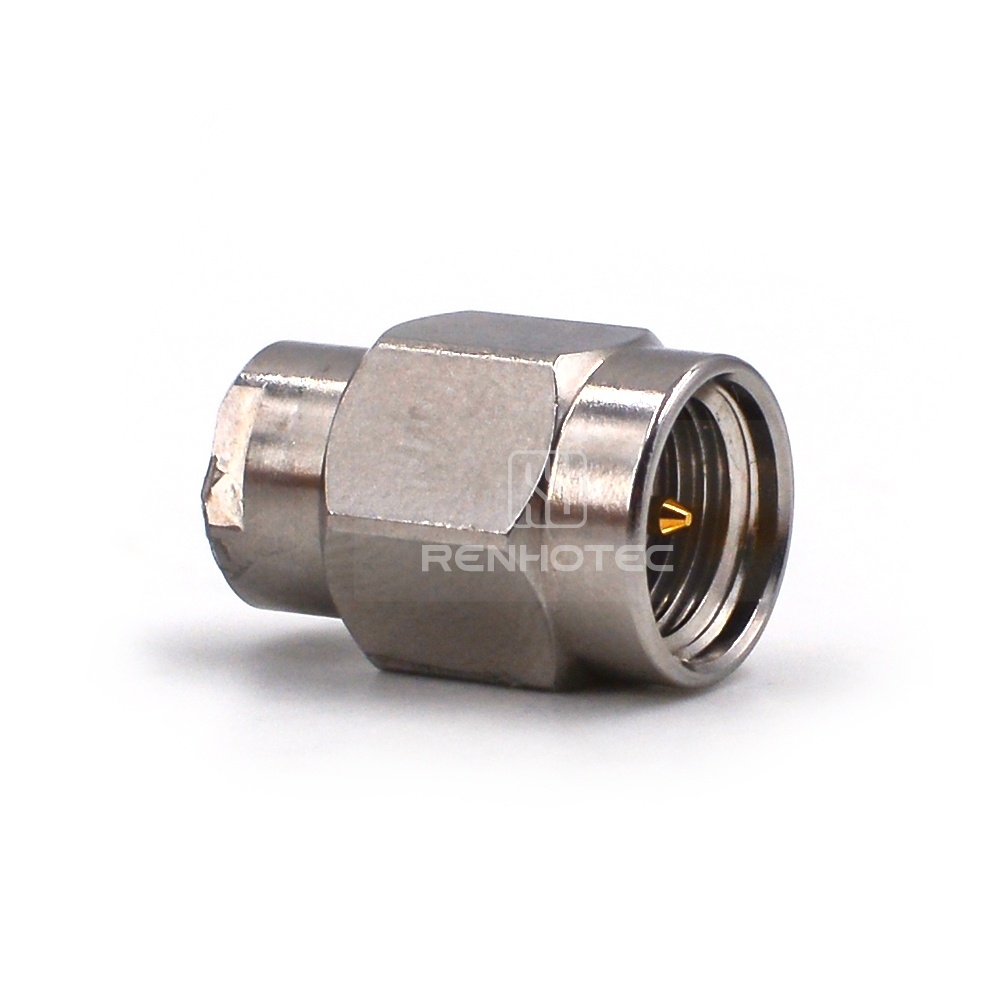
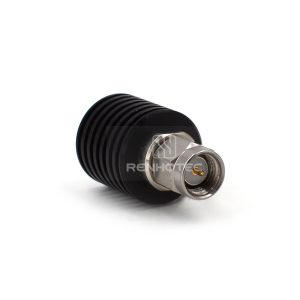
This is where the SMA 50 Ohm Terminator (also known as a Terminator RF dummy load) becomes a critical component. It serves as the “sponge” of the RF world, safely absorbing signal energy and preventing reflections. Whether you are designing a complex telecommunications module or calibrating a Vector Network Analyzer (VNA), choosing the right terminator is non-negotiable.
In this guide, we will break down exactly what an SMA terminator is, decode the critical specifications like VSWR and frequency, and help you avoid common selection mistakes.
What is an SMA RF Terminator?
At its core, an SMA RF terminator is a one-port device with a built-in resistor that matches the characteristic impedance of the transmission line—standardized at 50 Ohms.
Definition and Working Principle
The primary function of a terminator RF device is to simulate an infinite transmission line. When a signal reaches the terminator, the internal resistive element converts the RF electrical energy into heat, which is then dissipated into the terminator’s body or heatsink. Because the impedance matches the line (50 Ohms), the signal is absorbed rather than reflected.
Why 50 Ohm?
You might ask, why not 60 or 100 Ohms? The 50 Ohm standard is a historical compromise established in the early 20th century, largely by organizations like Bell Labs and the US military. It balances maximum power handling (which favors 30 Ohms) and lowest signal loss (which favors 77 Ohms). For most RF power transfer and data communication applications, SMA 50 Ohm has become the universal standard.
Key Specs: Reading the Datasheet
When selecting a terminator, generic descriptions aren’t enough. You must understand the specific parameters to ensure system integrity.
Frequency Range(DC to 18GHz+)
An SMA connector is physically capable of handling high frequencies, but the internal resistor of the terminator defines the limit.
-
Standard Grade: DC to 3 GHz or 6 GHz (Low cost, sufficient for Wi-Fi/LoRa).
-
Precision Grade: DC to 18 GHz (Standard for SMA 50 Ohm terminators).
-
High-Frequency: Up to 26.5 GHz (Requires high-precision machining).
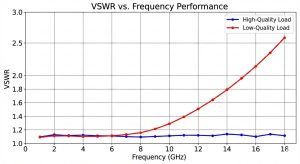
Fact Check: Using a 6 GHz terminator in an 18 GHz system will result in unpredictable impedance and high reflections due to parasitic capacitance.
VSWR (Voltage Standing Wave Ratio)
VSWR is the most critical metric for a terminator RF. It measures how much signal is reflected. A perfect load has a VSWR of 1:1 (0% reflection), which is impossible in the real world.
Power Rating (CW Power)
This indicates how much continuous wave (CW) power the load can handle before burning out.
-
0.5W / 1W: Standard size (often Hex 8mm).
-
2W – 5W: Usually longer bodies or black finned heatsinks.
-
Over 10W: Large external heatsinks required.
Common Applications
Where exactly do engineers use these components?
-
Terminating Unused Ports: In devices like Quadrature Hybrids or Wilkinson Power Dividers, all ports must be terminated to maintain the isolation and balance of the system. Leaving a port open destroys the performance of the connected ports.
-
Test & Measurement: When calibrating a VNA, a precise SMA 50 Ohm load is used to define the “Match” standard.
-
Protection: In high-gain amplifier circuits, a terminator on the output (via a circulator) can absorb reflected energy coming back from an antenna, protecting the expensive amplifier transistor.

Common Mistakes in Selection
Even experienced engineers can make simple errors when rushing a BOM (Bill of Materials).
-
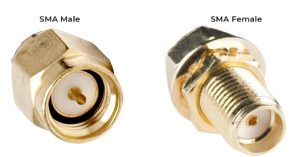
Gender Mismatch (Male vs. Female):
-
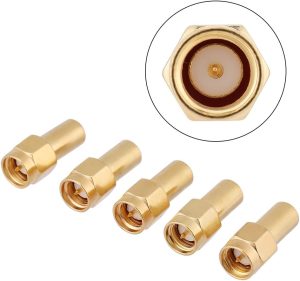
SMA Male (Plug): Has a center pin and internal threads. This is the most common terminator type because equipment ports are usually female.
-
SMA Female (Jack): Has a center hole and external threads.
-
Tip: Always check the port you are terminating. Don’t assume.
-
-
Confusing 50 Ohm with 75 Ohm:
-
Physically, they look similar. However, the center pin of a 75 Ohm SMA is slightly smaller. Forcing a 50 Ohm Male pin into a 75 Ohm Female jack can physically damage the contact tines.
-
-
Ignoring Power Derating:
-
A 1W terminator is rated at room temperature (25°C). At 85°C inside an enclosure, that same terminator might only handle 0.5W safely. Always check the “Power Derating Curve” in the specs.
-
Buying Guide: How to Choose a Supplier
When sourcing SMA 50 Ohm terminators for mass production, look for these quality indicators:
-
Body Material:
-
Brass (Gold/Nickel Plated): Cost-effective, good for commercial use (up to ~3-6 GHz).
-
Stainless Steel (Passivated): Essential for high durability (500+ mating cycles) and higher frequencies (18GHz+). It prevents the threads from galling (wearing out).
-
-
Chain Options: For field equipment, buy terminators with a retaining chain to prevent loss when the port is in use.
-
Test Data: reputable suppliers can provide sweeping test data (VSWR plot) for the batch, not just a promise of performance.
FAQ
Q: Can I use a metal dust cap as a terminator?
A: No. A dust cap protects the threads but creates an Open or Short circuit. It reflects 100% of the energy, whereas a terminator RF absorbs it. Using a dust cap on a live high-power port can damage your transmitter.
Q: What happens if I exceed the power rating?
A: The internal resistor will overheat. This usually causes the resistance value to drift (e.g., from 50 Ohm to 60 Ohm), increasing reflection. In extreme cases, it will burn open, causing total system failure.
Q: Are SMA terminators waterproof?
A: Standard ones are not. For outdoor use (base stations), look for IP67-rated terminators with internal O-rings.
Related Products
Contact US
Find Your Precision RF Termination Solution
Selecting the right Terminator RF is crucial for ensuring signal integrity and protecting sensitive components in high-frequency circuits. Whether you need standard 50-ohm SMA Terminators for laboratory testing, system calibration, and port protection, or customized high-power, low-VSWR solutions for telecommunications and aerospace applications, our engineering team has the expertise to meet your exact performance requirements.
Contact our RF component specialists at [email protected] to discuss your SMA Terminator RF needs, request custom impedance or power ratings, and access our complete catalog of precision termination solutions.


As an industry specialist at Renhotec Group, I have years of expertise in the field of electronic interconnection. Founded in 2008, Renhotec Group is a global leader in designing and manufacturing connectors, cables, and custom electronic components for a wide range of industries. We are committed to providing high-performance interconnect solutions, leveraging technical innovation and rigorous quality standards to empower global customers across industrial, RF, and EV sectors.