
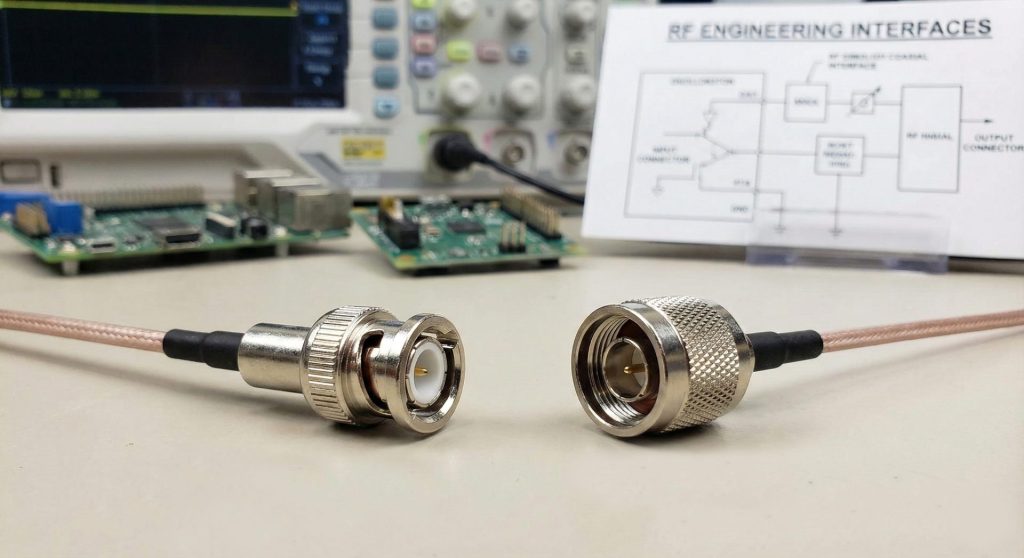
Quick Look: BNC vs TNC Specification Comparison
| Feature | BNC Connector | TNC Connector |
| Coupling Type | 2-Stud Bayonet (Quick Turn) | 7/16-28 Threaded (Screw) |
| Frequency Range | DC – 4 GHz | DC – 11 GHz (up to 18 GHz) |
| Impedance | 50 Ohm / 75 Ohm | 50 Ohm |
| Vibration Resistance | Low / Moderate | High / Excellent |
| Primary Use | Labs, CCTV, Broadcast | Avionics, Telecom, Industrial |
What is a BNC Connector?
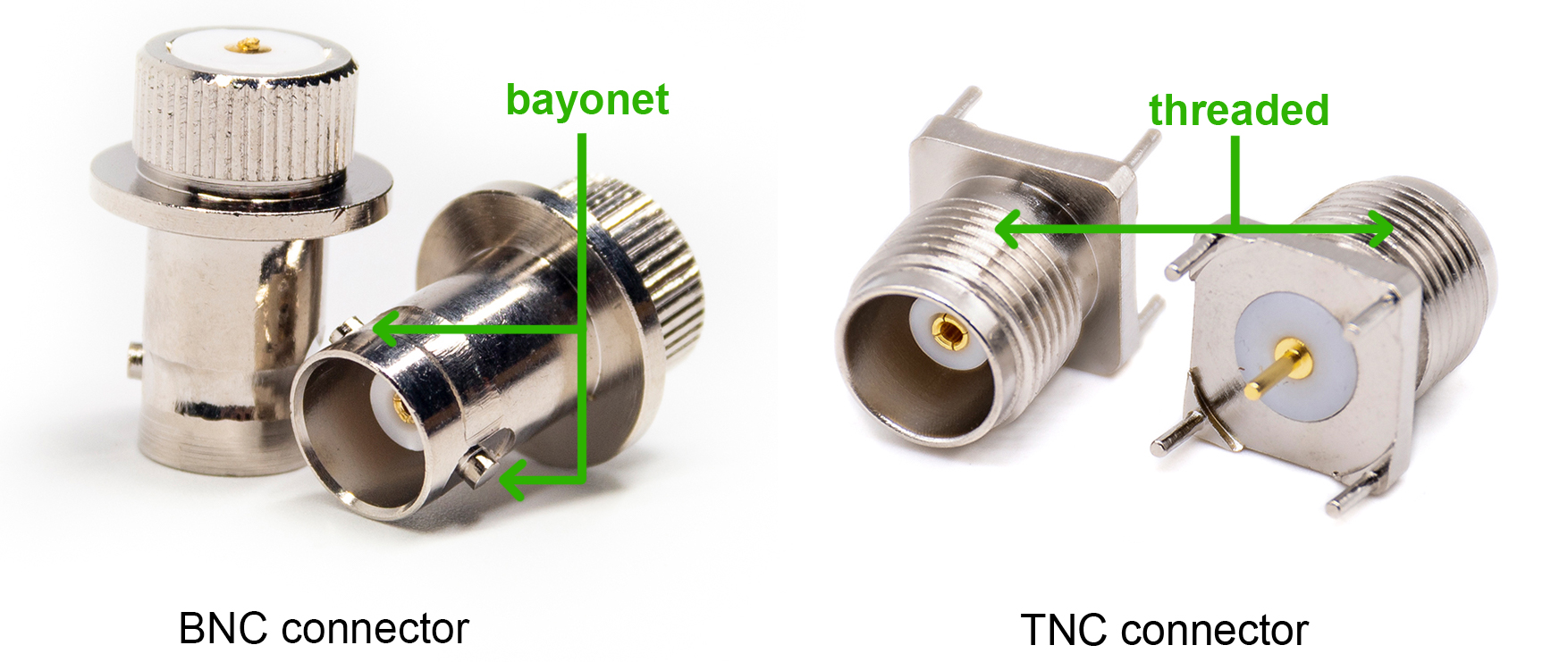
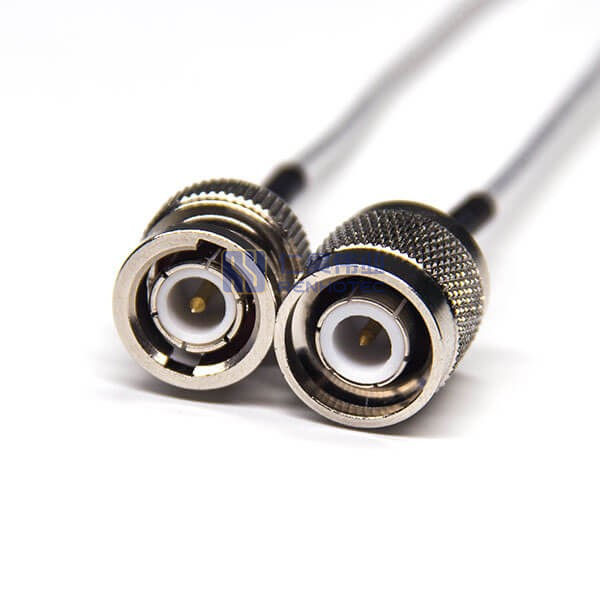
The BNC RF connector (Bayonet Neill Concelman connector) is arguably the most popular RF connector for frequencies under 4 GHz. Its defining feature is the two-stud bayonet coupling mechanism. This design allows for a “quick connect/disconnect” functionality—users simply insert the plug and rotate it a quarter-turn to lock it in place.
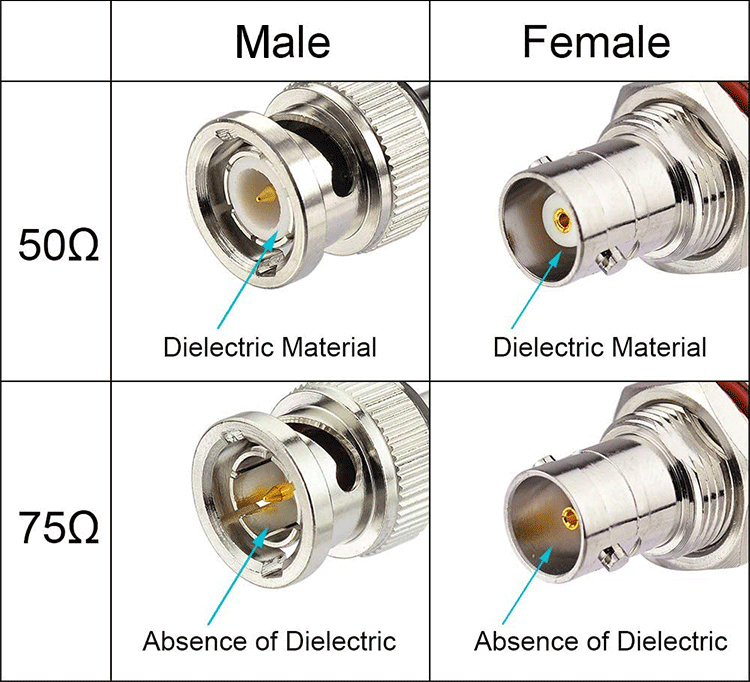
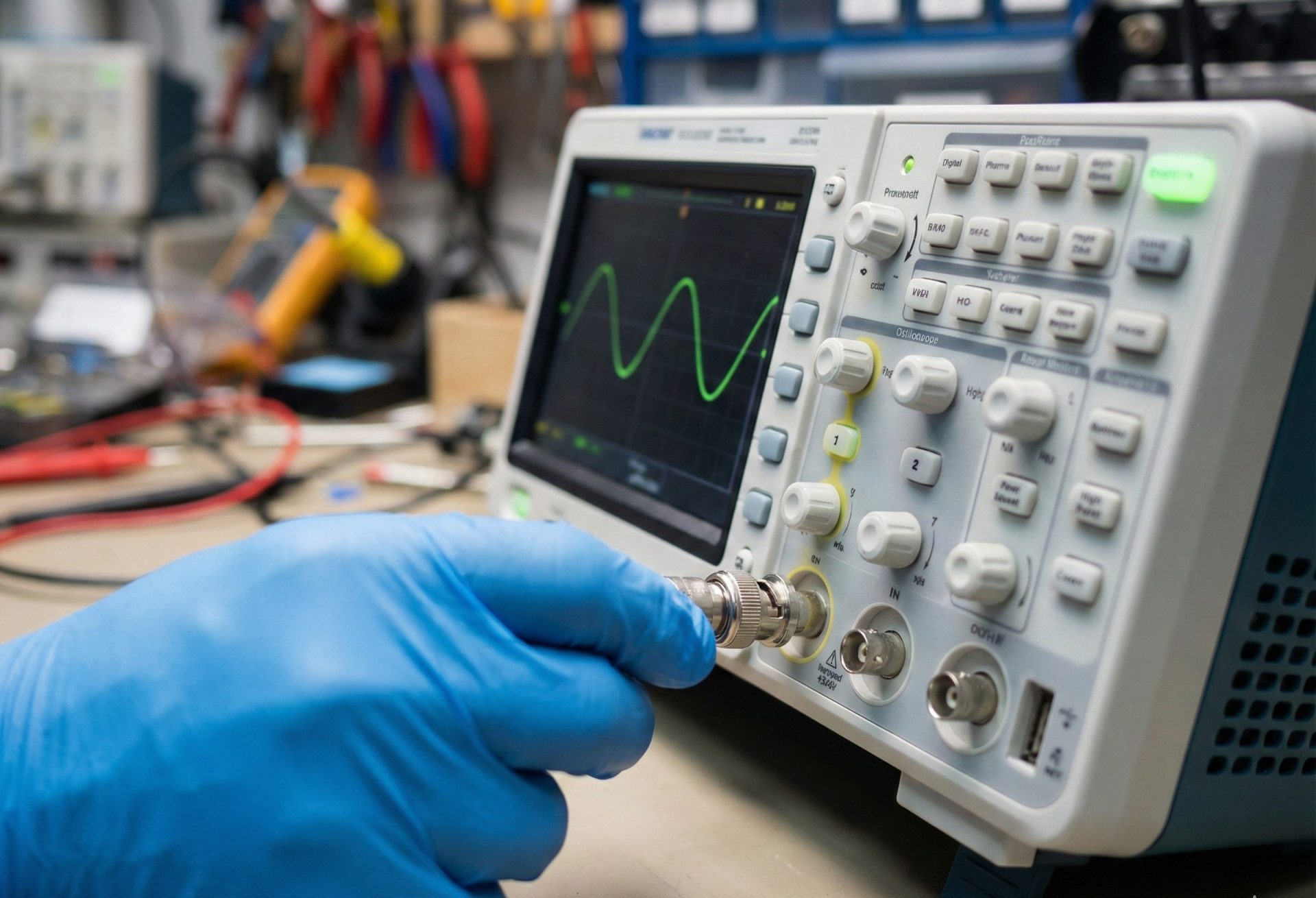
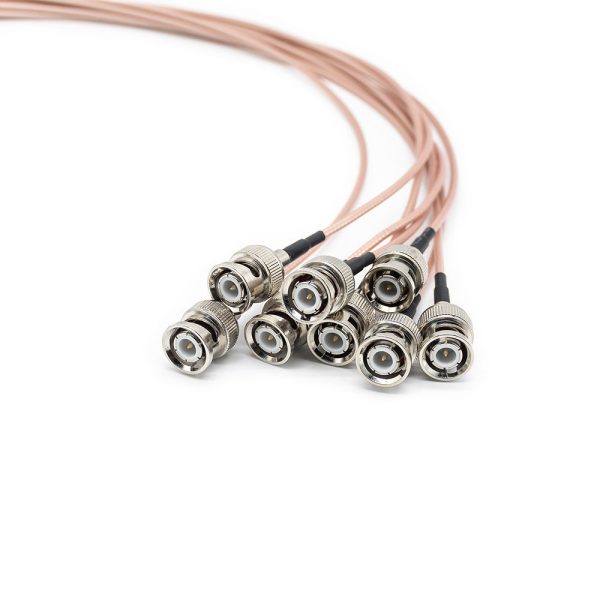
This ease of use makes the BNC ideal for test equipment like oscilloscopes and signal generators where cables are frequently swapped. Most standard applications utilize a 50 ohm bnc cable assembly to match the system impedance, ensuring minimal signal reflection. While 75 ohm versions exist for video applications, the 50 ohm version remains the standard for data and RF transmission.
What is a TNC Connector?
The TNC (Threaded Neill-Concelman) connector is essentially a threaded version of the BNC. Invented shortly after the BNC, the TNC was developed to solve a specific problem: signal noise generated by the movement of BNC connectors during intense vibration.
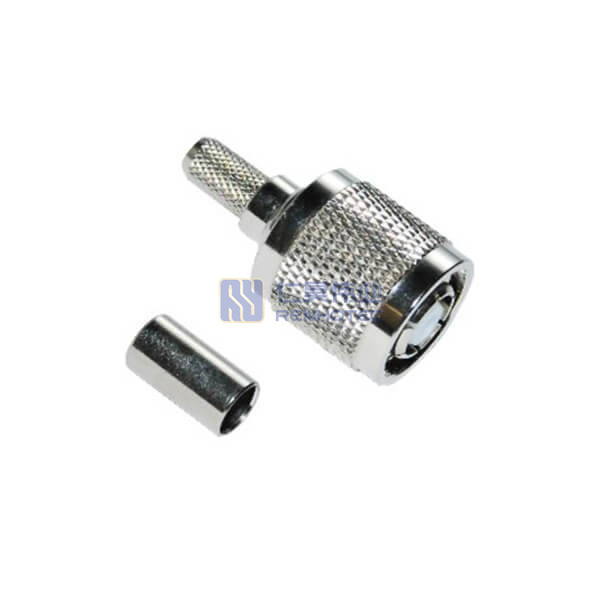
Instead of a bayonet lock, the TNC plug connector features a 7/16-28 thread. This screw-on mechanism ensures a tight, gap-free mating between the plug and the jack. Consequently, a tnc female connector allows for better shielding effectiveness and maintains a consistent electrical contact even under mechanical stress. This makes it a preferred choice for mobile communications and radar systems where reliability is non-negotiable.
Difference Between BNC and TNC Connectors
While they share a genetic history, the divergence in their coupling mechanisms leads to significant performance differences.
Coupling Mechanism & Vibration Resistance
The most visible difference lies in how they lock.
- BNC (Bayonet): Uses a spring-loaded bayonet ring. While fast, the spring tension allows for slight axial movement. In high-vibration environments—such as inside a vehicle or on industrial machinery—this movement can cause “signal noise” or intermittent discontinuities.
- TNC (Threaded): The threaded interface eliminates this movement entirely. Once tightened to the correct torque, the outer conductors are firmly pressed together, ensuring a stable ground path even under intense shaking.
Frequency Range and Electrical Performance
The physical stability of the TNC translates directly into better electrical performance at microwave frequencies.
- BNC: Typically rated DC to 4 GHz. Beyond 4 GHz, the slots in the bayonet mechanism can act as radiating elements, causing signal leakage (EMI) and insertion loss.
- TNC: Typically rated DC to 11 GHz, with precision versions operating up to 18 GHz. The continuous threaded contact acts as a superior waveguide, containing the RF energy more effectively.
Physical Installation and Mounting
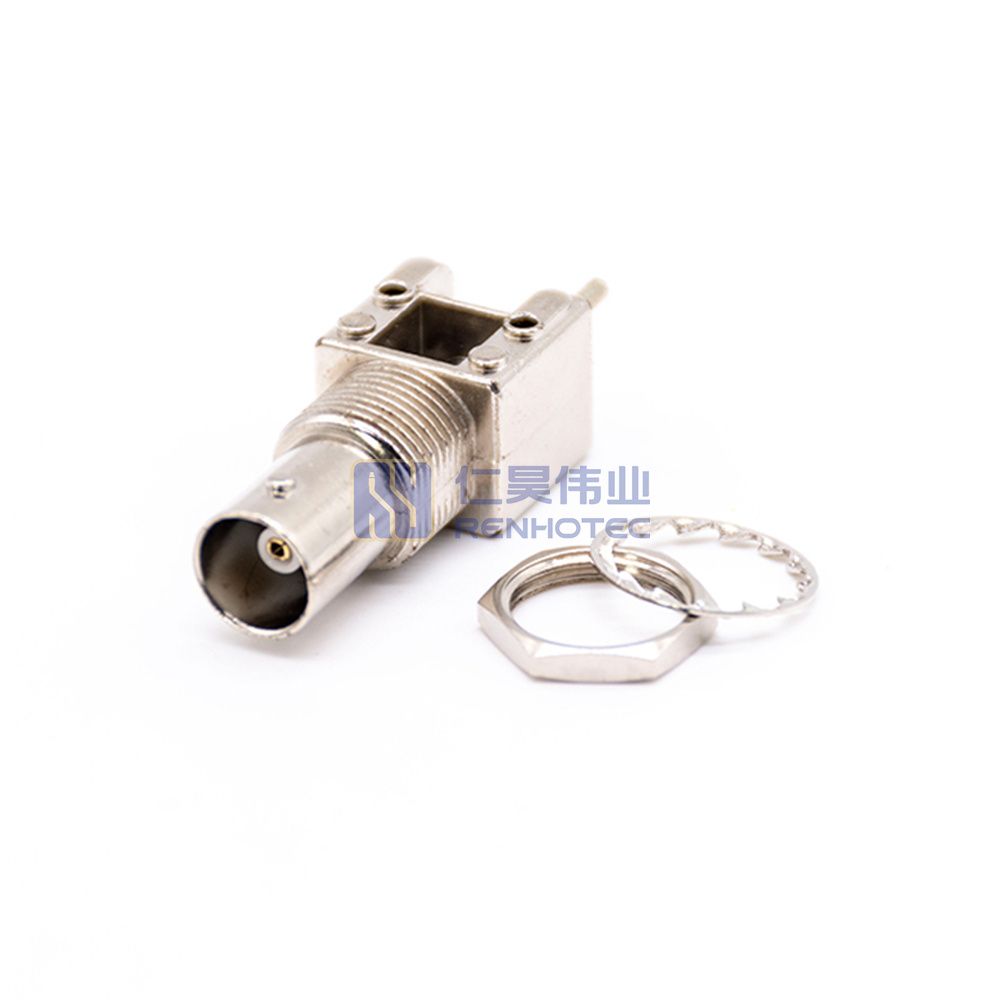
When designing equipment panels, engineers must select the correct mounting hardware. For instance, a standard bnc bulkhead connector (used for panel mounting) requires a specific cutout shape—usually a circle with a flat side (D-cut) to prevent rotation during the quarter-turn locking process. A TNC bulkhead relies on the mechanical compression from a wrench to secure the threaded mating. Engineers must be mindful of the tnc connector torque specification during assembly to avoid over-tightening, which can damage the internal dielectric, or under-tightening, which leads to signal instability.
TNC Torque Range:
Brass: 4.1 – 6.1 in-lbs (0.5 – 0.7 N-m)
Stainless Steel: 12 – 15 in-lbs (1.36 – 1.7 N-m)
Applications: Which One Should You Choose?
When to Choose a BNC Connector?
Select the BNC when your application is indoors, static, and requires frequent interaction.
- Test & Measurement: Oscilloscopes, function generators, and spectrum analyzers (<4GHz).
- Video Surveillance: Analog and HD-SDI CCTV systems utilizing 75-ohm cabling.
- General Electronics: Lab bench setups where engineers need to swap connections rapidly.
When to Choose a TNC Connector?
Select the TNC when the environment is hostile or the frequency exceeds 4 GHz.
- Aerospace & Avionics: Cockpit instrumentation subject to flight turbulence.
- Industrial Control: Sensors and actuators on vibrating heavy machinery.
- Wireless Communications: Wi-Fi antennas, cellular base stations, and microwave links utilizing a tnc rf connector for minimal signal loss.

FAQ
Q1: Can I plug a TNC connector into a BNC jack?
No. Even though the center pins are identical in size, the outer coupling mechanisms (threads vs. bayonet) make them mechanically incompatible. You would need a BNC to TNC adapter.
Q2: What is RP-TNC?
RP-TNC (Reverse Polarity TNC) is common in Wi-Fi routers. It reverses the gender of the contact pin—the male plug houses a female contact, and the female jack houses a male pin. This was originally mandated by the FCC to prevent consumers from connecting professional high-gain antennas to home devices.
Q3: Is TNC better than SMA?
Not necessarily “better,” but different. TNC is larger and more rugged than SMA, making it easier to handle with gloves and more resistant to physical damage. However, SMA connectors are smaller and generally operate at higher frequencies (up to 18-26.5 GHz).
Related products
Contact US
Are you designing a system that demands the convenience of a bnc connector or the rugged stability of a TNC plug connector?
At Renhotec, we specialize in high-performance RF interconnects. Whether you need a custom 50 ohm bnc cable assembly or a waterproof bnc bulkhead for a specialized panel, our engineering team is ready to assist.
Contact us today for a free consultation and quote on your RF project: [email protected].

Connectors & cable assemblies manufacturer.
Sharing insights on connectors and real-world applications.
Contact for datasheets, samples, or inquiries.
